- Sethi and Sons Industries
- Apr 26, 2026
- Uncategorized
- 0 Comments
In India’s rapidly growing infrastructure, agriculture, and industrial sectors, HDPE (High-Density Polyethylene) pipes have become the backbone of reliable water supply, irrigation, and fluid transportation systems. Whether you’re a farmer setting up drip irrigation in Maharashtra, a contractor building municipal water lines in Rajasthan, or an industrial buyer sourcing pipes for chemical transport in Gujarat or Tamil Nadu, one question remains critical: Is this HDPE pipe truly high-quality?
At Sethi & Sons Industries, a leading HDPE pipe manufacturer based in Maharashtra but serving industries across India with over 14 years of expertise, we believe informed buyers make the best decisions. Poor-quality pipes can lead to leaks, bursts, contamination, and expensive replacements. This complete guide walks you through every practical and technical way to verify HDPE pipe quality — from simple on-site checks to advanced lab tests — so you can choose pipes that last 50–100 years.
Why HDPE Pipe Quality Matters More Than You Think
HDPE pipes are prized for their flexibility, corrosion resistance, lightweight nature, and ability to handle high pressure and extreme temperatures. They are widely used in potable water supply, irrigation, sewage, gas distribution, and industrial applications across India. However, substandard pipes made from recycled material or improper resin fail prematurely, causing:
- Water loss and higher pumping costs
- Soil and water contamination
- Project delays and safety hazards
- Frequent maintenance is eating into your budget
Choosing ISI-certified pipes (IS 4984:2016) from a trusted manufacturer ensures zero defects, full compliance, and long-term performance.
Understanding HDPE Pipes: The Basics
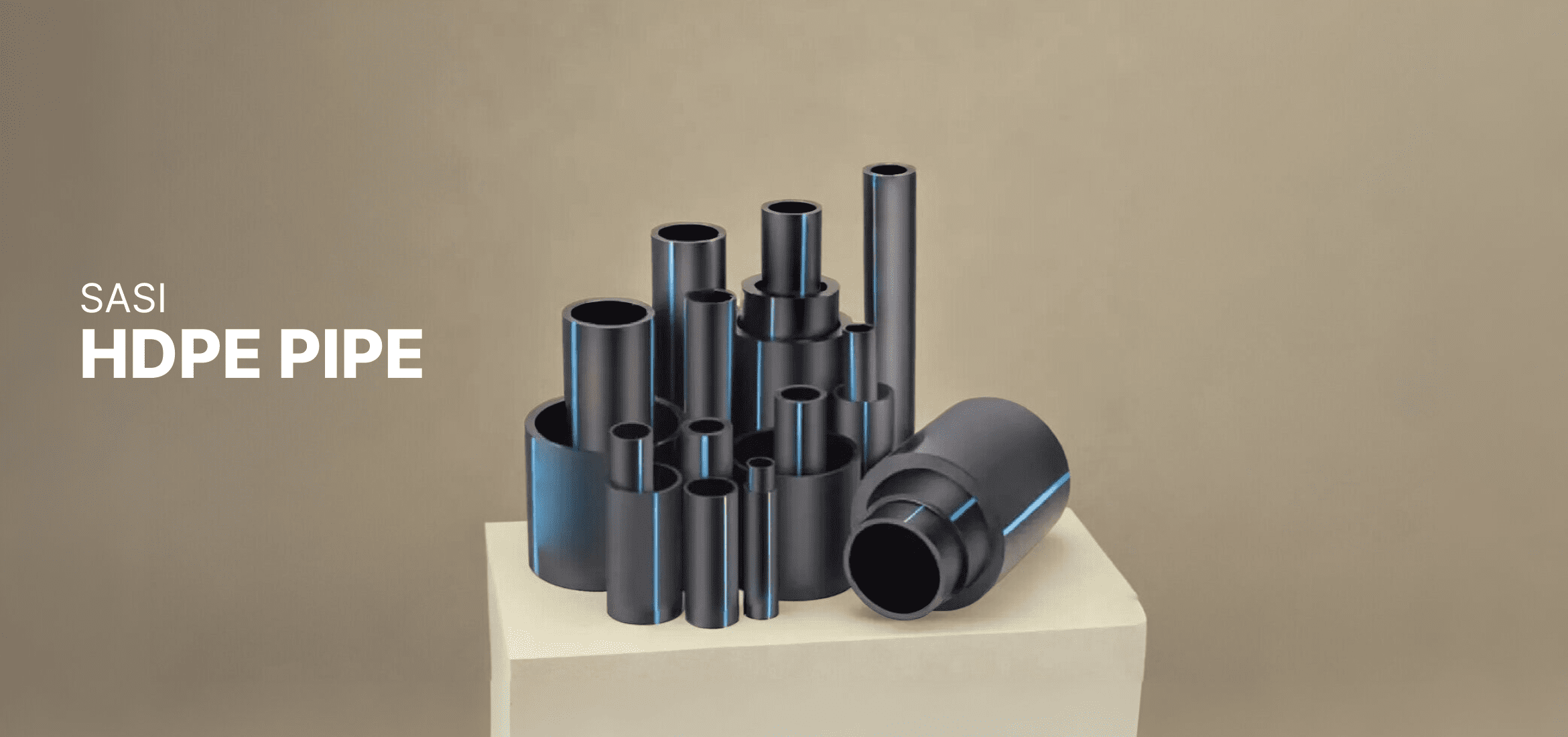
HDPE is a thermoplastic polymer with a high strength-to-density ratio. Quality HDPE pipes are produced from virgin PE-63, PE-80, or PE-100 grade resin. Key features of premium pipes include:
- Uniform black color with 2–2.5% carbon black for UV protection
- Smooth inner and outer surfaces for high flow rates
- Pressure ratings (PN 4 to PN 16) and Standard Dimension Ratio (SDR 6 to SDR 41)
- Food-grade, non-toxic certification for drinking water
Now, let’s dive into the complete checklist.
Step-by-Step Guide: How to Check HDPE Pipe Quality On-Site
1. Visual Appearance Inspection (First 30 Seconds Test)
High-quality HDPE pipes have:
- Uniform, deep black color (no fading or mottling)
- Smooth, glossy inner and outer surfaces with no bubbles, dents, pits, cracks, or impurities
- Even wall thickness is visible from the cut end
Red flag: Dull surface, visible streaks, or roughness indicate poor extrusion or recycled material.
2. Check Markings and Certifications
Every genuine pipe must carry permanent markings (at intervals of 1 meter):
- Manufacturer’s name or brand (e.g., Sethi & Sons Industries)
- IS 4984 certification mark and license number
- Material grade (PE 100), pressure rating (PN), SDR, outer diameter, and manufacturing date/year
- Batch number
Pro tip: Sethi & Sons pipes carry clear ISI markings and comply with IS 4984, ISO 4427, and ISO 9001.
3. Dimensional Accuracy Check
Use a vernier caliper or pi tape:
- Measure outer diameter (OD) at multiple points — tolerance as per IS 4984 (±0.5–1.5% depending on size)
- Check wall thickness at 4 points around the circumference (minimum thickness must match SDR rating)
- Pipes must be perfectly round (no ovality beyond 2%)
4. Weight Test
Heavier pipes = more material = better quality. Compare the actual weight with the manufacturer’s specification chart. Sethi & Sons pipes consistently meet or exceed standard weight requirements.
5. Flexibility and Ring Stiffness Test
- Bend a small sample by hand — quality pipes are flexible yet return to shape without kinking.
- Press the pipe ring between palms; it should resist deformation (good ring stiffness).
6. Odor and Smell Test
Genuine virgin HDPE has a very mild or no plastic odor. A strong chemical or burnt smell signals recycled or low-grade resin.
7. Simple Butt-Fusion Test (for installers)
Cut a ring and fuse two pieces. The weld bead should be smooth and symmetrical, and the strip should not break easily when folded repeatedly.
Advanced Laboratory Tests Every Buyer Should Know
While on-site checks are practical, manufacturers perform these tests in ISO-certified labs as per IS 4984:2016:
- Density Test — Must be 0.940–0.965 g/cm³ for true HDPE.
- Melt Flow Rate (MFR) — Indicates processability and molecular weight.
- Carbon Black Content & Dispersion — 2–2.5% with excellent dispersion for UV resistance.
- Oxidation Induction Time (OIT) — Minimum 20 minutes at 200°C for long-term thermal stability.
- Hydrostatic Pressure Test — Pipes must withstand 1.5–2 times rated pressure for 1 hour and 1000+ hours without failure.
- Tensile Strength & Elongation at Break — Minimum 350% elongation proves toughness.
- Slow Crack Growth Resistance — Ensures pipes resist environmental stress cracking.
- Longitudinal Reversion Test — The heated pipe should not shrink more than 3%.
At Sethi & Sons Industries, every batch undergoes these rigorous checks in our dedicated quality lab before dispatch.
Common Red Flags of Substandard HDPE Pipes
- Inconsistent color or visible recycled specks
- Thin walls or uneven thickness
- Missing or fake ISI markings
- Excessive ovality or warping
- Low weight compared to standard charts
- Brittle feel or easy cracking when bent
Buying from unverified sources often leads to these issues — always demand test certificates (TC) and material safety data sheets (MSDS).
Why Sethi & Sons Industries Delivers Unmatched HDPE Pipe Quality
Sethi & Sons Industries is based in Maharashtra but serves industries across India. With 14+ years of excellence, 89,640+ MT pipes delivered, and 1700+ satisfied clients pan-India, we stand out as one of the most trusted HDPE pipe manufacturers in the country. Here’s what sets us apart:
- Virgin premium-grade PE-100 resin sourced only from certified suppliers
- State-of-the-art extrusion lines with real-time ultrasonic wall-thickness monitoring
- Full ISI 4984, IS 4984:2016, ISO 9001, and ISO 4427 compliance
- In-house quality team performing 100% visual, dimensional, and pressure testing
- Customization in sizes (20mm to 400mm+), pressure ratings, and lengths
- Food-grade certified pipes safe for potable water
- UV-stabilized, corrosion-proof, and leak-proof performance guaranteed
Our pipes are engineered to meet the diverse needs of clients from Maharashtra to Rajasthan, Gujarat, Madhya Pradesh, Karnataka, and beyond — delivering zero leakage and maximum flow efficiency.
Final Thoughts: Invest in Quality That Lasts
Checking HDPE pipe quality is not complicated when you follow this complete guide. By focusing on visual checks, markings, dimensions, and demanding proper certifications, you protect your project and budget for decades.
At Sethi & Sons Industries, quality is not a department — it is our culture. Every pipe that leaves our facility in Maharashtra carries our promise of durability, reliability, and performance across India.
Ready to source the best HDPE pipes in India? Contact Sethi & Sons Industries today!
Explore our full range of ISI-certified HDPE pipes, garden pipes, suction hoses, and more.